
Quartz Vs Granite Countertops
2026-08-24
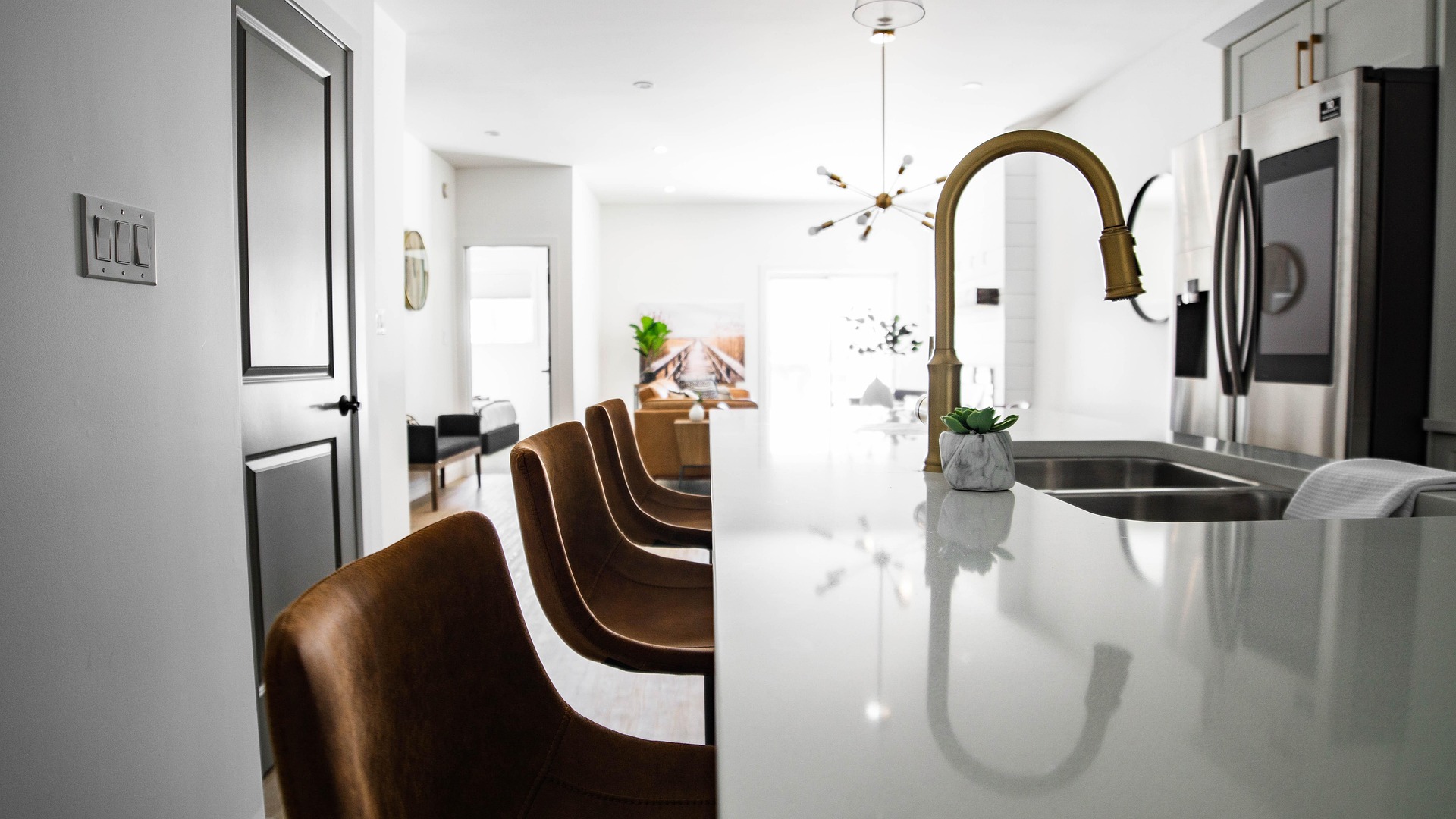
Countertops need to look great, stand up to everyday use, and fit within your budget. Two of the most popular choices for homeowners are quartz and granite.
Both materials offer durability, attractive designs, and long-term value, but they have some important differences. So, which countertop is best for your home? Here's how quartz and granite compare.
What Are Quartz Countertops?
Quartz countertops are an engineered stone product made primarily from natural quartz minerals combined with resins, pigments, and other materials. Because they're manufactured rather than cut directly from a slab of natural stone, quartz countertops are available in a wide variety of colors and patterns.
Modern quartz can recreate the appearance of marble, granite, and other natural stones while providing a more consistent appearance from slab to slab.
Advantages of Quartz Countertops
Low maintenance: Quartz is nonporous, so it doesn't require regular sealing like many natural stone countertops.
Stain resistant: The nonporous surface helps prevent liquids such as coffee, wine, juice, and cooking oils from penetrating the countertop.
Wide variety of designs: Quartz is available in numerous colors, patterns, and finishes, making it easy to coordinate with cabinets, flooring, and backsplashes.
Consistent appearance: If you prefer a uniform countertop pattern throughout your kitchen, quartz provides more consistency than natural granite.
Durable: Quartz is highly resistant to scratches, chips, and everyday wear when properly cared for.
Disadvantages of Quartz Countertops
Quartz isn't completely indestructible. Because the material contains resins, high temperatures can damage or discolor the surface. Hot pots and pans should be placed on trivets or heat-resistant pads rather than directly on the countertop.
Quartz can also be relatively expensive, particularly for premium colors and patterns.
What Are Granite Countertops?
Granite is a natural stone that's quarried from the earth, cut into slabs, polished, and fabricated into countertops. Every slab has its own unique combination of colors, veining, speckles, and mineral patterns.
For homeowners who appreciate the character and variations found in natural materials, granite remains an excellent countertop choice.
Advantages of Granite Countertops
Natural beauty: No two granite slabs are exactly alike, giving your kitchen or bathroom a one-of-a-kind appearance.
Excellent heat resistance: Granite generally handles heat better than engineered quartz, although using trivets is still a good habit.
Highly durable: Properly installed granite countertops can withstand decades of normal household use.
Wide selection: Granite comes in many colors and patterns, ranging from subtle neutral tones to dramatic stone with bold veining and movement.
Long-term appeal: Natural stone countertops remain desirable among many homeowners and can be an attractive feature when selling a home.
Disadvantages of Granite Countertops
Because granite is porous, most granite countertops should be properly sealed to help resist stains and moisture. Depending on the stone and sealer used, periodic resealing may be recommended.
Natural variation can also make matching slabs more difficult. If your kitchen requires several slabs, seams and differences in pattern may be more noticeable.
Quartz vs. Granite: Maintenance
For homeowners looking for the easiest countertop to maintain, quartz generally has the advantage.
Quartz doesn't typically require sealing and can usually be cleaned with mild soap and water. Granite is also relatively easy to clean, but maintaining the stone's protective seal is important.
If you want a countertop that requires minimal ongoing maintenance, quartz may be the better choice.
Which Is More Durable?
Both quartz and granite are extremely durable and suitable for busy kitchens.
Quartz offers excellent resistance to staining and everyday wear, but excessive heat can damage the resins within the material.
Granite offers excellent resistance to heat and scratching but may be susceptible to staining if the stone isn't properly sealed.
For most households, either material can provide many years of service with proper care.
Which Countertop Looks Better?
This ultimately comes down to personal preference.
Choose quartz if you prefer:
- Consistent colors and patterns
- Clean, contemporary designs
- Marble-inspired looks
- A large selection of predictable colors and finishes
Choose granite if you prefer:
- Authentic natural stone
- Unique patterns and mineral variations
- More organic-looking surfaces
- A countertop that's truly one of a kind
It's always a good idea to look at full slabs whenever possible rather than choosing a countertop based solely on a small sample.
Quartz vs. Granite Cost
The cost of both materials can vary considerably depending on the color, pattern, thickness, manufacturer, availability, fabrication requirements, and complexity of the installation.
In many cases, quartz and granite fall into similar price ranges, although entry-level granite may cost less than premium quartz. On the other hand, rare or exotic granite slabs can cost considerably more.
When comparing estimates, make sure you're looking at the complete installed price, including the countertop material, fabrication, edge treatments, sink and faucet cutouts, seams, delivery, and installation.
Which Is Better for Kitchen Countertops?
For many homeowners, quartz has become an especially attractive kitchen option because of its combination of durability, low maintenance, and design flexibility. It's particularly well suited for busy households where spills and everyday cleanup are common.
Granite remains an excellent choice for homeowners who prefer natural materials and want the distinctive character that comes from real stone.
Neither is universally "better." The right choice depends on how you use your kitchen and what you want it to look like.
What About Bathroom Vanities?
Both materials work well in bathrooms, too.
Quartz's nonporous surface and low maintenance make it particularly convenient around sinks, cosmetics, soaps, and other bathroom products. Granite can provide a beautiful natural-stone appearance but should be properly sealed to help protect against moisture and staining.
So, Which Countertop Should You Choose?
If you want a low-maintenance countertop with consistent colors and a wide range of design options, quartz may be your best choice.
If you love the natural beauty, unique patterns, and heat resistance of real stone, granite may be the better fit.
The good news is that there's really no wrong answer. Both quartz and granite can provide a beautiful, durable surface that enhances your kitchen or bathroom for years to come.
Planning a Kitchen or Bathroom Remodel?
Choosing countertops is just one part of creating a kitchen or bathroom that looks great and works for your family. Cabinetry, flooring, lighting, backsplashes, fixtures, storage, and layout all need to work together to create a functional finished space.
Thinking about remodeling your kitchen or bathroom? Contact Opus Contractor Group LLC us to discuss your project and get started.
